
Flag designed by Outwood Academy Hindley students makes it to Antarctica

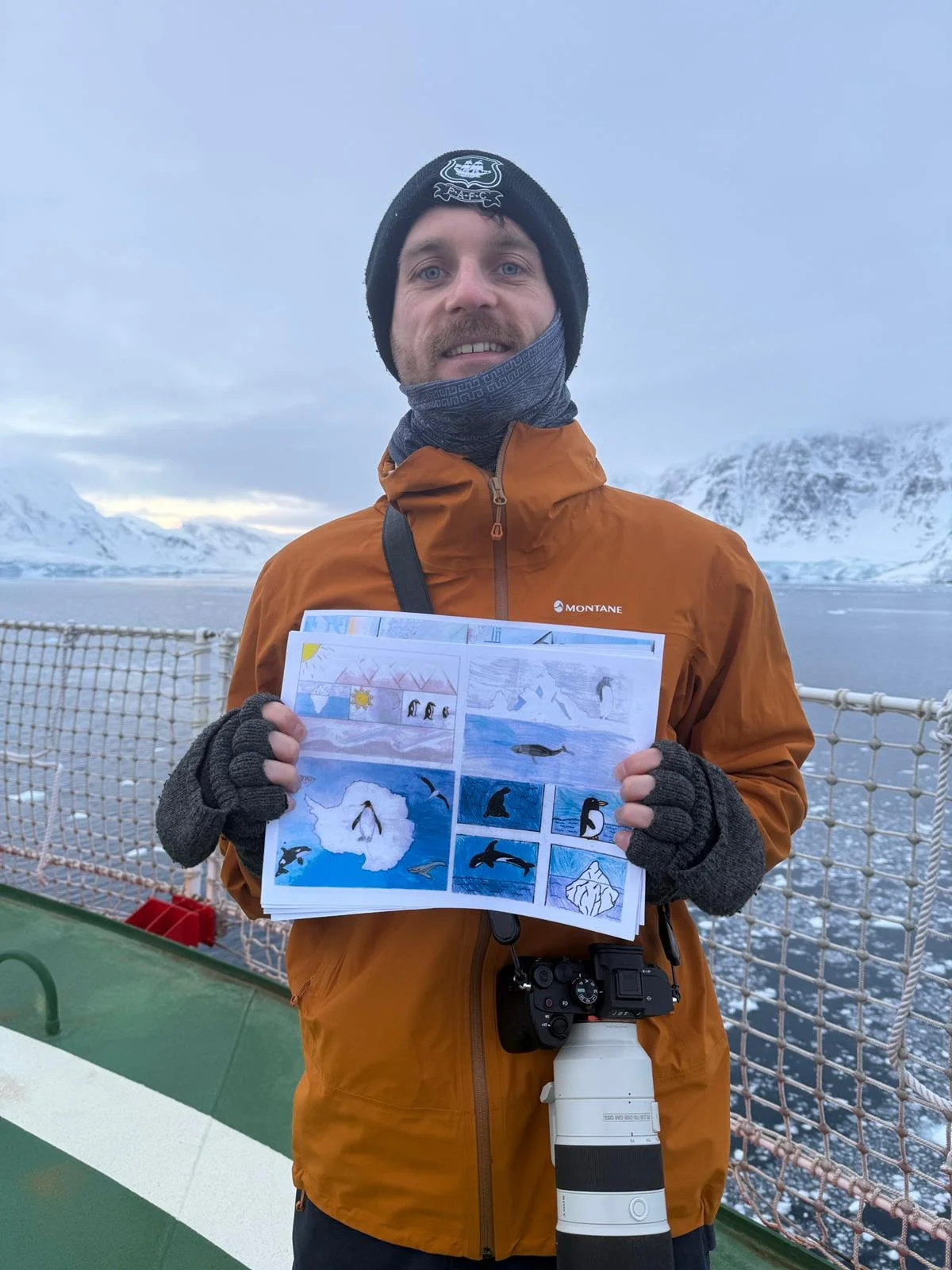
A group of Year 7 pupils has seen their creative vision travel over 9,000 miles to the frozen landscapes of Antarctica. The flag, designed by students Bobby Baggeley, Jude Gibson, Joseph Booth, and Thomas Lewis at Outwood Academy Hindley, has successfully reached the continent as part of the UK Polar Network’s (UKPN) “Antarctic Flags” initiative.
The project, which celebrates Antarctica Day (marking the signing of the Antarctic Treaty), pairs schools with polar researchers to send hand-drawn flags to the world's southernmost continent. This year's winning design was carried to the Antarctic by two dedicated polar professionals, Joe Jackson, Third Officer on the RRS Sir David Attenborough, Britain’s state-of-the-art polar research vessel and Faron Quinn, a PhD Researcher in Antarctic Biogeochemistry, who took the flag to the remote Ryder Bay, a site of significant scientific interest near the British Antarctic Survey’s Rothera Research Station.
The UK Polar Network’s initiative aims to inspire the next generation of scientists and explorers by connecting the classroom and real-world polar expeditions. For these Year 7 pupils, seeing their artwork photographed against the backdrop of Antarctic glaciers is a rare and prestigious achievement.
One of the student flag designers, Thomas Lewis, said:
“I am so proud that my drawing is in Antarctica. I'm thankful my work got picked to travel all the way!”
Victoria Watson, Teacher of Geography, added:
“We are incredibly proud to see our students' creativity represented on a global stage. Designing these flags required them to think deeply about Antarctica, climate science and the importance of international cooperation. Seeing a researcher hold up our school's flag against the backdrop of the Antarctic ice gave our pupils a profound sense of connection to one of the most remote and vital environments on our planet.”
The RRS Sir David Attenborough is one of the most advanced polar vessels in the world, serving as a multidisciplinary research platform that allows scientists to study the ocean, seafloor, and ice. The flag’s arrival at Ryder Bay further connects the students' work to critical climate and biogeochemical research currently being conducted in the region.
